

Do GPS Cattle Ear Tags Need Charging? Understanding Light-Powered Operation
What light energy harvesting actually changes on the ranch—and the practical pasture checks to run before deploying tags on your herd.
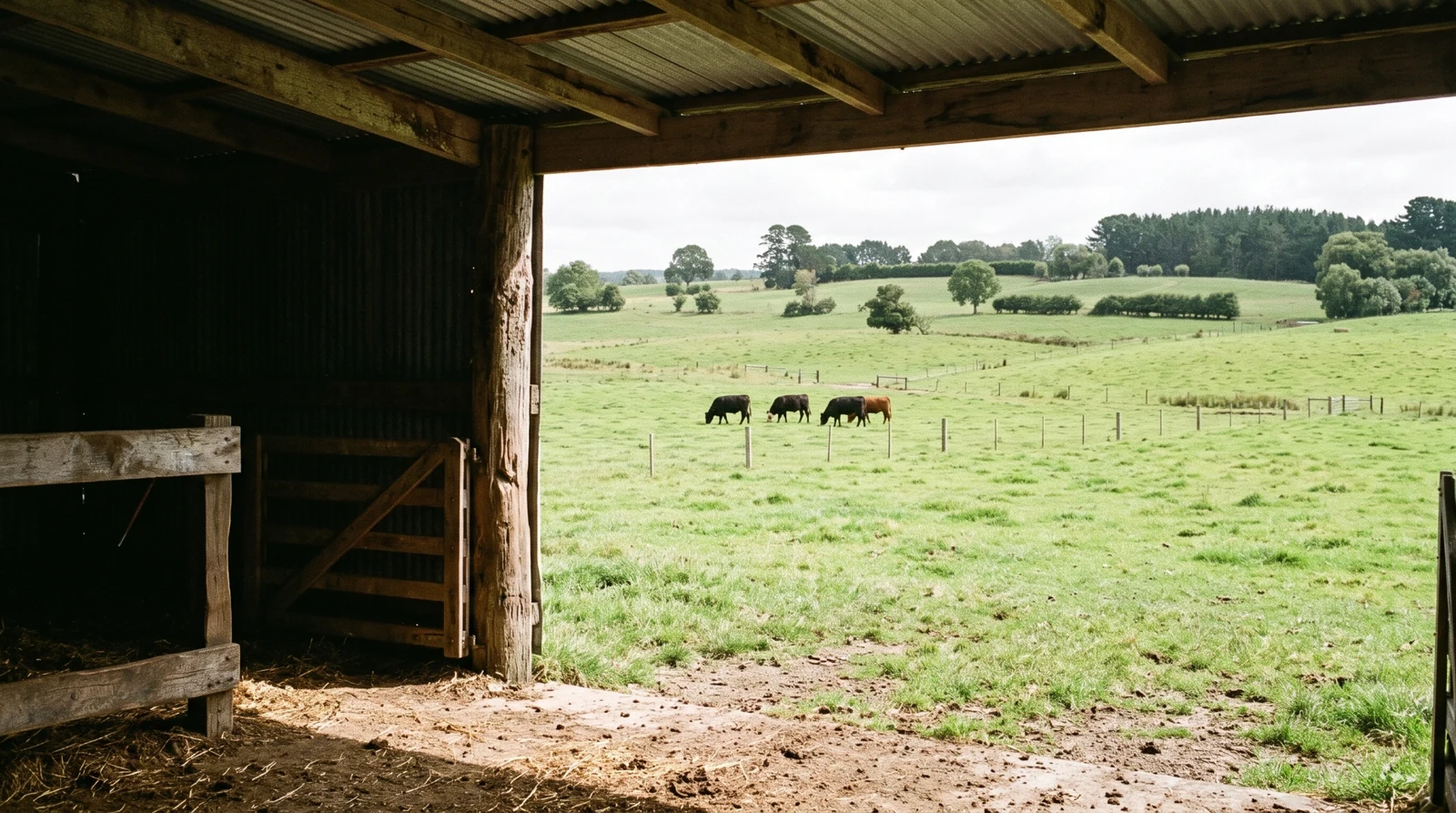
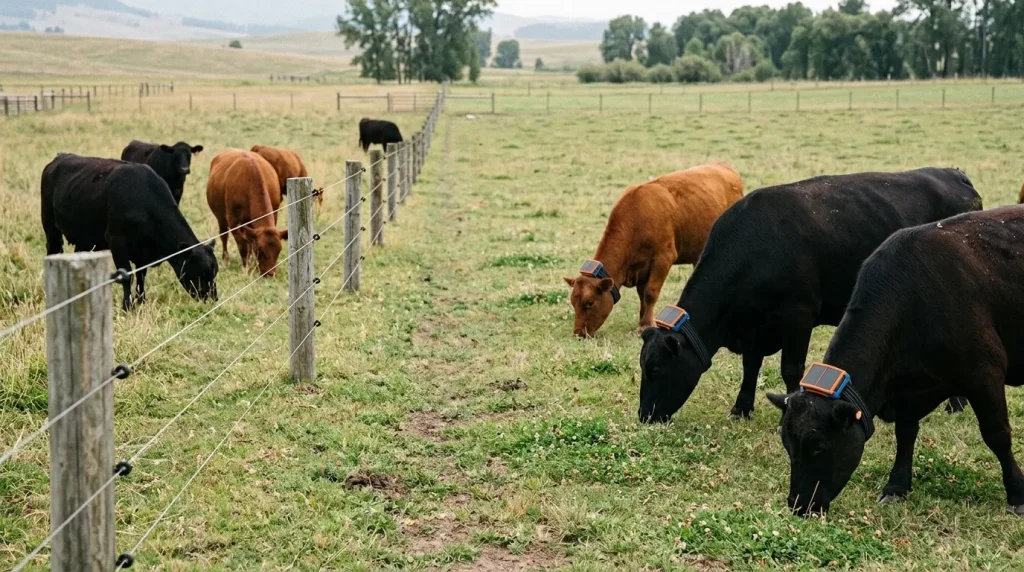
Light exposure varies between covered areas and open pasture. Illustrative scene.
Before investing in GPS cattle ear tags, every rancher and operations manager asks the same practical question: Once that tag is on the animal’s ear, how do we keep it powered?
On an extensive grazing operation, “charging a battery” isn’t as simple as plugging a phone into the wall. It means locating dispersed cattle across hundreds of acres, driving them into the corrals, running them through the chute, and pulling labor away from other critical farm tasks.
That is exactly why light-powered ear tags exist. By harvesting ambient light to replenish energy while cattle graze, a light-powered tag drastically reduces manual charging and battery-swapping work. However, “light-powered” shouldn’t be mistaken for “infinite power in every possible environment.”
We engineered the Fullanim T005 GPS Ear Tag around light energy harvesting to solve the herd-maintenance bottleneck. Here is a straightforward look at how light-powered operation works in everyday grazing—and what you should evaluate on your own pastures before rolling out a pilot.
Do GPS Cattle Ear Tags Need Manual Charging?
There is no universal charging rule for every smart ear tag on the market. Some heavy-duty tracking devices rely on primary (non-rechargeable) batteries that eventually expire, while others require periodic recharging. Before buying, you need to know how a specific tag harvests, stores, and spends its energy.
With the Fullanim T005, built-in light energy harvesting tops up the internal energy storage whenever the tag is exposed to usable light. Our goal is simple: eliminate routine roundups just to service batteries.
That said, practical livestock tech requires honest math. Whether a tag can run continuously without manual intervention depends on your energy budget—balancing the light available in your pastures against how hard you ask the tag to work.
| Instead of asking: “Does this tag charge itself?” Ask the practical operational question: “Will the light conditions in my pastures support the location reporting frequency my team needs?” |
How Light-Powered Operation Works: The “Energy Budget”
At its core, light energy harvesting converts ambient light into electrical power. But the harvesting surface on the outside of the tag is only half the story. Inside the housing, ultra-low-power circuitry, energy storage, positioning modules, and wireless transmitters all have to work together seamlessly. Every time the tag wakes up, acquires a position fix, and sends a packet of data over the network, it spends a tiny fraction of its stored energy.
For a farm manager, you don’t need a degree in electrical engineering to evaluate this—you just need to look at both sides of the ledger:
- Energy In: How many hours of usable light does the tag see on a typical day?
- Energy Out: How often is the tag waking up to measure and transmit data?
Light energy harvesting changes how power is replenished in the field, but it doesn’t remove the need to manage energy demand. Matching your software settings to your environment is what keeps the system running smoothly.
For general background, see Epishine’s overview of designing a light energy harvesting product. This reference explains general design principles, not T005 components or a supplier relationship.
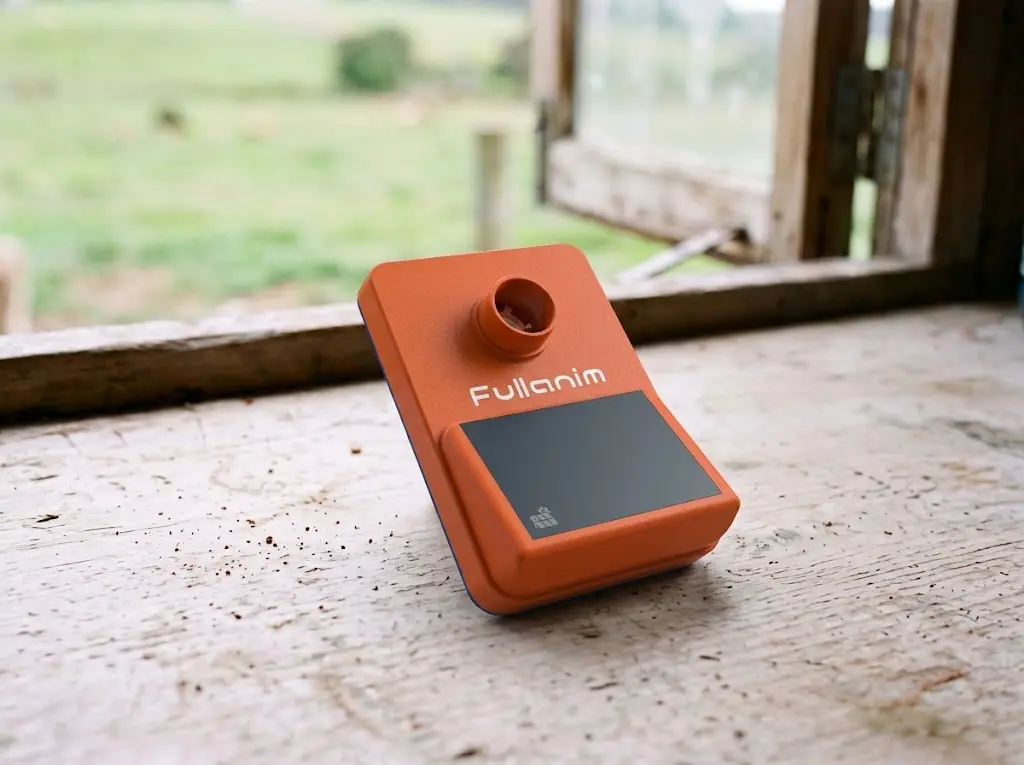
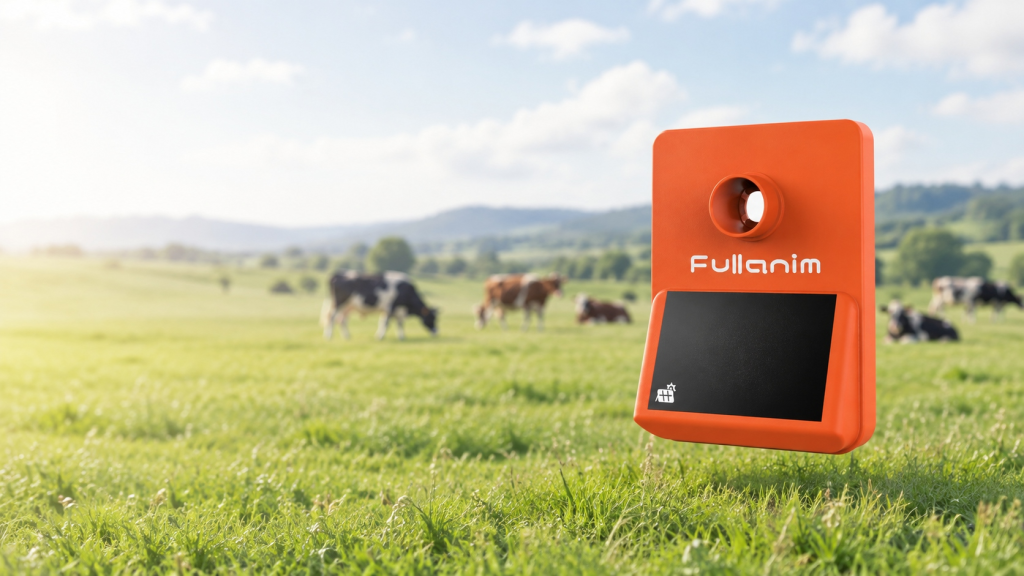
Illustrative product scene. Appearance should be checked against the approved T005 product reference.
Does the T005 Need Direct, Blazing Sunlight?
No. We designed the Fullanim T005’s light-harvesting system to operate beyond direct, midday sunlight. Overcast skies and ambient daylight still contribute to energy replenishment.
However, “works beyond direct sunlight” does not mean every dark barn or heavily shaded forest will generate the same power as an open prairie. Before deploying tags, walk through where your cattle actually spend their day:
- Open grazing pastures with full sky exposure.
- Heavy tree cover or dense brush where animals congregate to escape summer heat.
- Roofed feed bunks, loafing sheds, or covered resting areas.
- Seasonal indoor housing (such as winter barns in northern climates).
- Physical obstruction —such as heavy mud, caked manure, or thick winter ear hair covering the tag’s harvesting surface.
Simply describing a ranch as an “outdoor operation in a sunny climate” can be misleading if the herd spends eight hours a day tucked under a shaded feedlot roof. If your cattle spend extended periods under cover, share that routine with our engineering team early so we can calculate a realistic power profile for you.
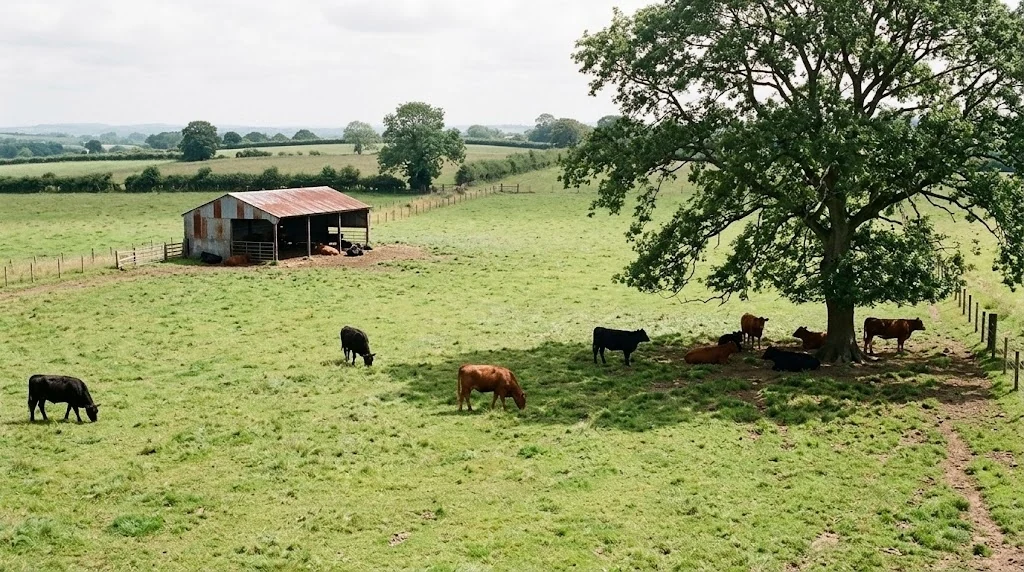
Review where cattle spend time: open pasture, tree shade and covered areas. Illustrative scene.
What Happens at Night or During a Week of Bad Weather?
Cattle don’t stop moving when the sun goes down or when a storm rolls in. A field-ready light-powered tag uses internal energy storage to bridge the gap through nighttime hours and stretches of poor weather.
How many days can the T005 run in total darkness or heavy gloom? Because power draw depends directly on your reporting settings, there is no single “one-size-fits-all” number. Instead of relying on generic catalog figures, ask us for the low-light and no-light operating curves that match your exact configuration.
When evaluating dark-period performance with any supplier, make sure to clarify these five points:
- 1. Starting charge level: What initial energy condition is required before fitting the tag on the animal?
- 2. Test parameters: What exact reporting interval and sensor settings were used to calculate the backup duration?
- 3. Environmental impact: How do extreme winter temperatures affect energy storage alongside low light?
- 4. System alerts: How will your team identify and respond to a power-related interruption versus a coverage blind spot?
- 5. Recovery protocol: What servicing or recovery procedure is recommended if energy replenishment falls short during prolonged indoor housing?
Why Reporting Intervals Belong in the Power Conversation
How often do you actually need a fresh location pin on your map?
For the Fullanim T005, the published default reporting interval is 15 minutes. In our field experience, a 15-minute update rate gives ranchers a concrete, reliable baseline—balancing timely herd visibility with sustainable daily power consumption.
If your operation requires faster updates or less frequent check-ins, confirm both the setting availability and its impact on your power budget before deployment. Start with the actual management task your farm team needs to perform:
- Locating strays & checking distribution: Is the team simply reviewing where grazing groups were last reported before sending out a hand?
- Automated head counts: Do you need periodic herd-inventory confirmation once or twice a day?
- Activity & behavior trends: Are you reviewing longer-term movement patterns over days or weeks?
- Actionable response time: If an alert triggers, how quickly can somebody on the ground realistically act on that information?
For a wider explanation of positioning, reporting, and gateway connectivity, read our guide on How GPS Cattle Ear Tags Work.
Does a “5-Year Service Life” Mean 5 Years With Zero Attention?
No. Let’s clear up a common industry misconception: a nominal service-life figure and an unattended no-light operating duration describe two very different things.
Fullanim engineers the T005 for a nominal service life of five years under validated light exposure, standard reporting settings, and normal deployment conditions. However, in real-world ranching, that figure should never be rewritten as:
- Darkness runtime: Five years of continuous operation locked inside a dark barn.
- Zero inspection: Five years without ever glancing at the tag during routine chute work.
- Unconditional settings: A blanket guarantee for every pasture and custom ping rate.
- Commercial warranty: A five-year warranty without confirming specific terms and conditions.
When comparing options and planning a pilot, keep these four questions distinct:
| Key Question | What to Confirm Before Deployment |
|---|---|
| How is energy replenished? | Light-harvesting operation and the required daily light exposure |
| What happens when light is insufficient? | Low-light operating limits and the recommended team response |
| What does the 5-year nominal life cover? | Applicable baseline settings, environmental conditions, and engineering definitions |
| What commercial support is included? | Warranty terms, servicing procedures, and replacement arrangements |
What Day-to-Day Maintenance Still Needs Planning?
Reducing battery-servicing work is a major step forward, but no piece of hardware attached to livestock is 100% maintenance-free. A practical farm deployment review should cover six basics:
- Fit & Placement: Confirm the approved fitting procedure and suitability for the target animals so the harvesting surface faces outward.
- Surface Exposure: Check during routine handling whether the light-harvesting window is regularly obscured by mud, manure, or hair.
- Routine Inspection: Agree on how tags will be visually checked for physical damage or heavy contamination when cattle pass through the chute.
- Safe Cleaning: Follow Fullanim’s cleaning instructions rather than assuming high-pressure washers or harsh solvents are acceptable.
- Reporting Checks: Review whether devices are consistently delivering the expected location updates.
- Exception Handling: Define who investigates tags that stop reporting—without automatically assuming a missing report means a dead battery.
Remember: Power, connectivity, and physical device condition should be checked separately. The T005 reports through a compatible LoRaWAN gateway, which also requires reliable power (solar or mains) and backhaul connectivity. Energy harvesting at the ear tag does not power the rest of your network infrastructure.
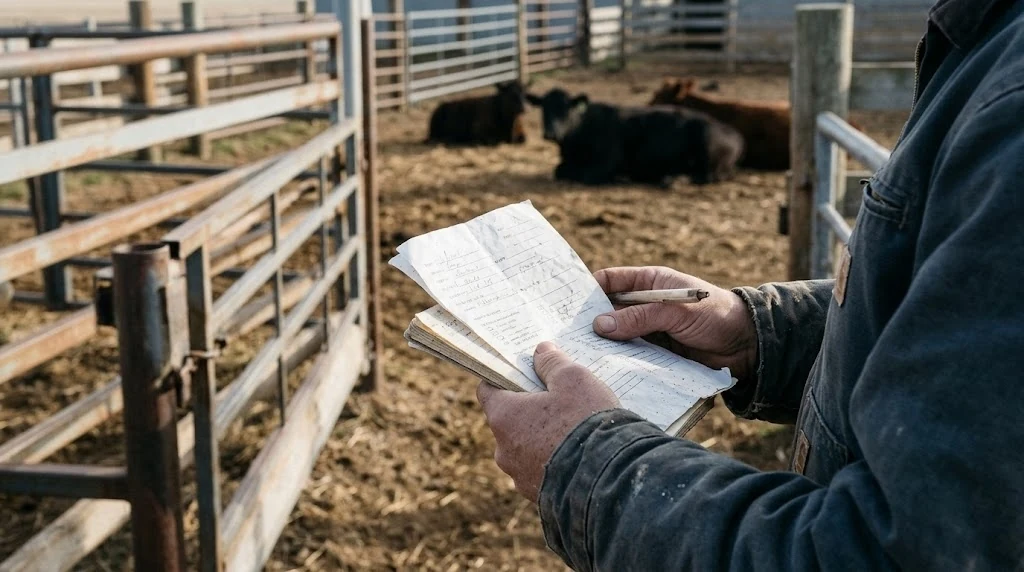
Include inspections, reporting checks and exception handling in the maintenance plan. Illustrative scene.
Test Your Pasture Conditions, Not Just the Product
A farm pilot should establish whether the proposed setup fits your specific terrain and grazing routine. Before starting, document your target reporting settings and select representative pastures—including areas where animals spend time under cover.
Use this 6-point framework with your team to evaluate the pilot:
| Pilot Check Area | Practical Question for the Farm Team |
|---|---|
| 1. Light Exposure | Where and when is the tag exposed to usable daylight versus heavy shade? |
| 2. Reporting Consistency | Are location updates arriving reliably at the agreed 15-minute (or custom) interval? |
| 3. Periods Under Cover | Does power operation remain stable during representative indoor or shaded routines? |
| 4. Physical Inspection | Is the device fitted, oriented, and maintained cleanly as instructed? |
| 5. Exception Diagnosis | Can the team distinguish possible power issues from LoRaWAN connectivity blind spots? |
| 6. Follow-Up Triggers | What evidence would trigger a setting adjustment, servicing visit, or gateway relocation? |
Where energy-status diagnostics are available in your software integration, include them in the review. Avoid drawing a year-round conclusion from a short trial in peak summer weather—always ask how seasonal daylight changes will be evaluated before expanding to the full herd.
Frequently Asked Questions (FAQ)
Is a light-powered ear tag completely “battery-free”?
Not necessarily. “Light-powered” describes how energy is harvested from light, not the complete internal energy-storage architecture. Confirm the T005’s internal storage and servicing arrangements with Fullanim rather than using “battery-free” as an interchangeable term.
Can the Fullanim T005 harvest energy without direct sunlight?
Yes. The T005’s light harvesting is not restricted to direct sunlight. However, available ambient light still needs to be assessed against your reporting interval—operating beyond direct sun is not a guarantee of sufficient energy at every indoor illumination level.
How long can the T005 operate without light?
Backup duration depends on the selected reporting configuration and starting charge condition. Confirm the applicable no-light duration and test conditions with Fullanim for your exact settings, rather than applying figures quoted for other devices.
Does light-powered operation mean zero maintenance?
No. It is engineered to reduce manual charging and battery-replacement roundups. Proper fitting, visual inspection, surface exposure, reporting checks, and exception handling still require an agreed farm process.
A More Practical Way to Think About Charging
For a grazing operation, the goal isn’t just to get rid of a charging cable—it is to eliminate avoidable chute work while keeping herd location data dependable. That requires the ear tag, light exposure, reporting interval, and ranch routine to work together as a system.
| Ready to evaluate the Fullanim T005 for your herd? Share your grazing environment, seasonal housing routines, and reporting requirements with our engineering team to build a realistic pilot plan. Explore T005 Power & Deployment Specifications |


 Contact us by email