

What Makes a Farm “Smart”—And Does It Need to Be?
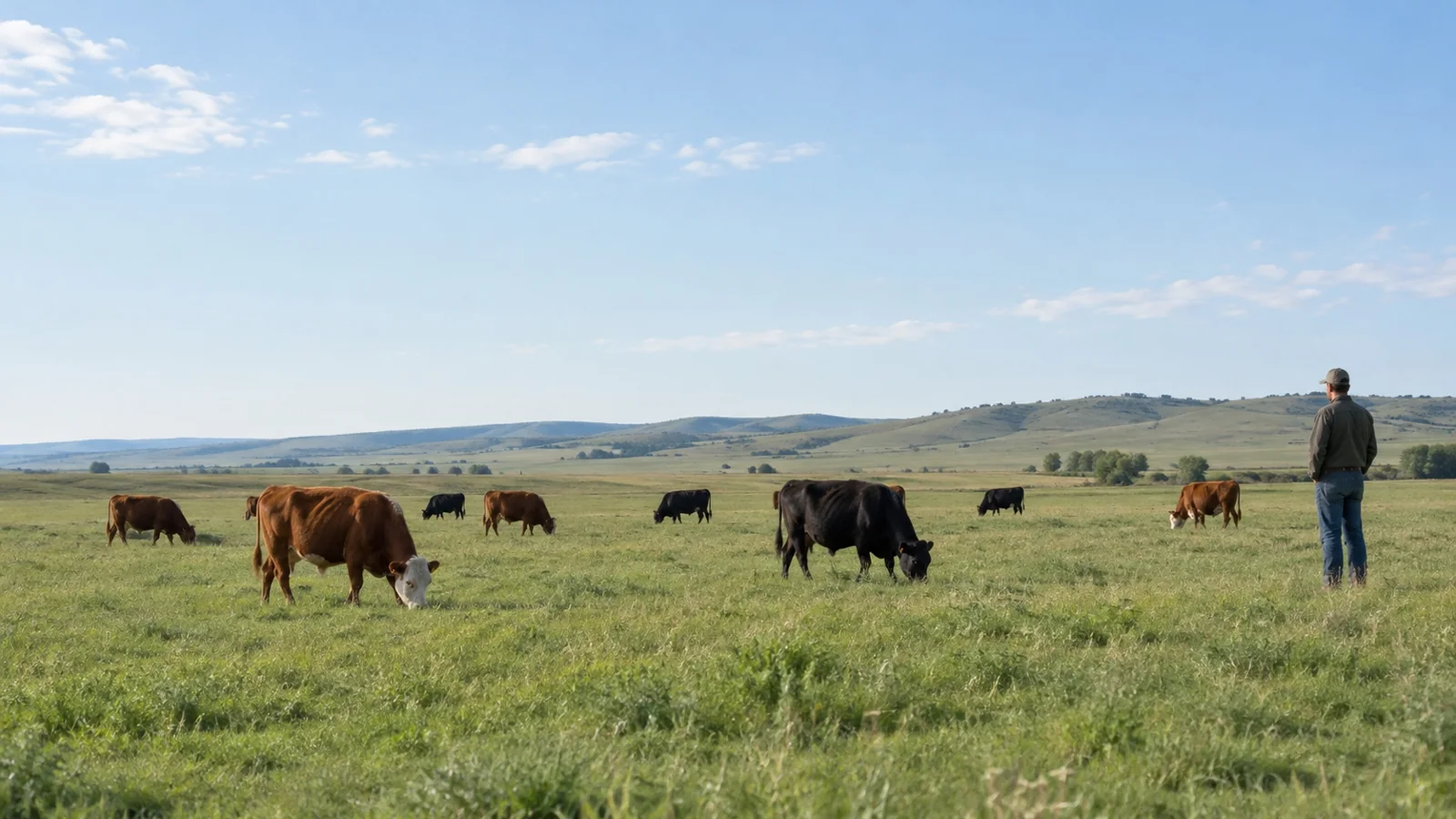
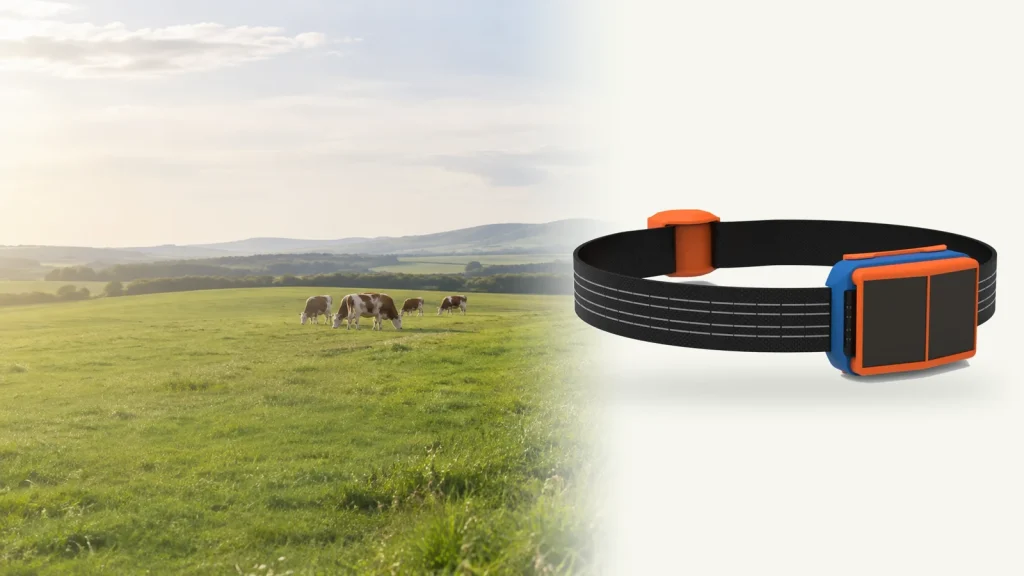
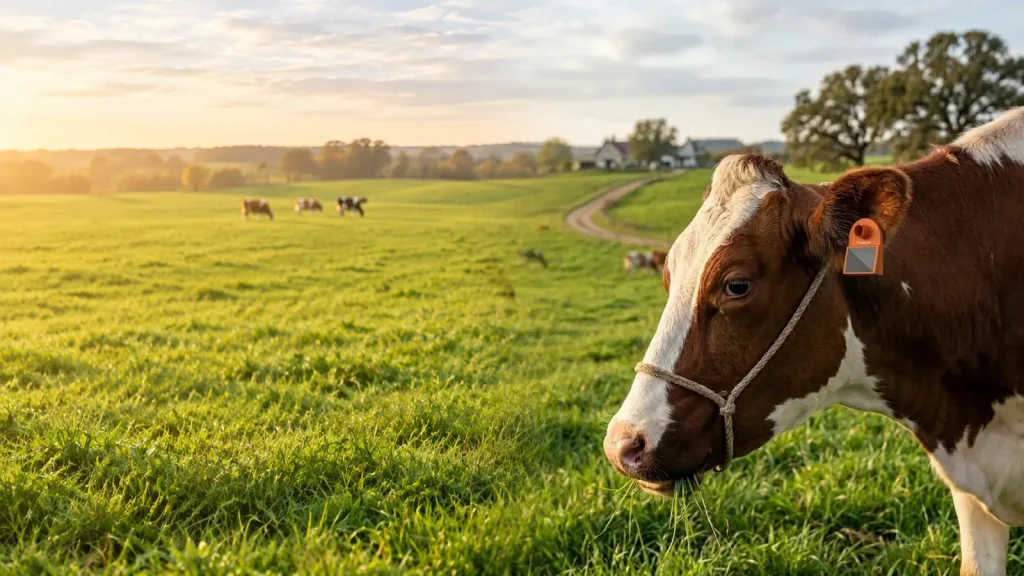
AI-generated editorial illustration; not a photograph of a customer farm.
Picture a farm at the end of a working day.
The animals have been checked. A broken gate has been repaired. Tomorrow’s jobs are already taking shape.
Now picture someone asking the person running it: “But is your farm smart?”
It is a strange question.
Does “smart” mean there are sensors in the fields? A map on a phone? A machine making decisions automatically? Or does it mean the farm runs well, with tools that suit the people doing the work?
Those are not necessarily the same thing.
Before adding more technology, it is worth asking what a farm actually needs to become better at—and whether becoming “smart” is even the right goal.
A Farm Is Not a Gadget Collection
Smart farming is often presented through its most visible parts: connected devices, automated equipment and dashboards full of information.
There is nothing wrong with those tools. But a collection of connected products is not, by itself, a better way to farm.
A useful starting point is much less dramatic:
What is difficult to see, difficult to remember or unnecessarily difficult to do?
For one livestock operation, the question might be where animals were last reported across a grazing area. For another, it might be keeping records consistent between people. Somewhere else, a straightforward repair or a clearer routine may matter more than another connected device.
The right answer does not have to look impressive in a photograph. It has to make sense on the farm.
Start With a Problem, Not a Shopping List
It is easy to begin a technology discussion with products.
Which sensor? Which network? Which platform?
A more useful first question is: “What do we need help with?”
Compare these two starting points:
“We should install a livestock monitoring system.”
And:
“When we check a distant grazing area, we want a more useful starting point than yesterday’s notes.”
The second statement does not yet tell you what to buy. That is its advantage. It leaves room to investigate the problem before committing to a solution.
It also gives you something to evaluate later. Did the new tool make the task easier? Was the information current enough to use? Could the team understand it without extra explanation?
Without a clear purpose, a successful installation can still leave you wondering what actually improved.
More Data Is Not the Same as More Understanding
Imagine opening a map and seeing a location marker for every animal.
It looks reassuring. But what does it tell you?
When was each location recorded? Are any reports missing? Does an unusual pattern need a closer look, or is there simply not enough information yet?
The map is useful only when those questions can be answered.
A location record, an activity chart or an automated count is not the end of a decision. It is information someone must interpret.
That does not make monitoring less valuable. It gives it a more realistic role: helping people decide where to pay attention.
Before adding another chart to a dashboard, ask:
- What question does this answer?
- Who needs to see it?
- How recent does the information need to be?
- What might someone do differently because of it?
If the answer is unclear, collecting more data may not be the next useful step.
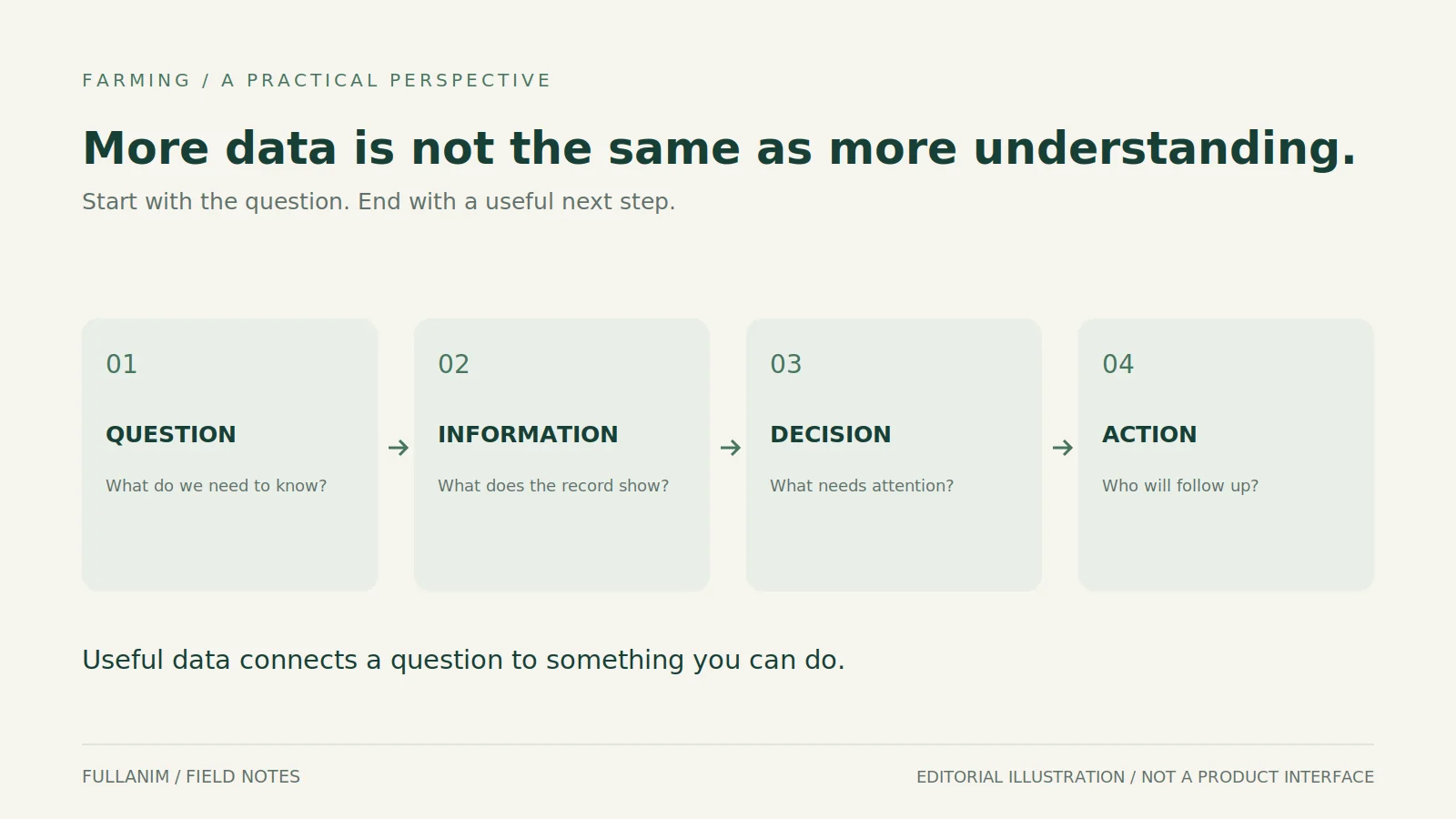
A useful record connects a practical question to a next step.
Experience Still Belongs in the Picture
A person who works with the same animals and land brings context that a dashboard cannot simply be assumed to contain.
They may know which area was used yesterday, which animals were recently moved or why the usual routine changed.
Technology can add another record to that understanding. It should not automatically be treated as a replacement for it.
A reported change can prompt a question. A farm visit can help explain it. A conversation with the team can add the detail that neither record captures on its own.
This is a more useful relationship than the familiar story of technology replacing old-fashioned experience.
The aim is not to prove that the device knows best. It is to help the person responsible make a better-informed judgement.
The Work Behind the Technology Counts Too
A device does not stop needing attention because it is called smart.
Someone has to install it, understand how it connects, keep records organised and know what to do when information does not arrive.
The purchase price is only part of that commitment.
An FAO study on digital automation in agriculture discusses adoption barriers including investment costs, skills and enabling infrastructure. Connectivity is part of the picture—not a detail that can always be sorted out afterwards.
For a farm considering a new system, that raises practical questions:
Can the team support it? Is help available locally? What happens when it needs attention during an already busy week?
These are not arguments against technology. They are part of choosing technology responsibly.
A tool should earn its place in the working day, not just in the equipment budget.
Keeping Things Simple Is a Valid Choice
Not every task needs to be automated. Not every observation needs an alert. Not every farm needs the same system.
Sometimes the sensible decision is to keep an existing method because it works.
Sometimes it is to add one tool to one part of the operation.
And sometimes it is to wait until the infrastructure, support or business case is clearer.
Choosing not to adopt something is not the same as refusing to improve. It can mean the proposed change has not yet answered the right questions.
The useful comparison is not “traditional” versus “smart.”
It is whether the new approach is better suited to the task than the current one, once its costs and extra work are included.
Try One Useful Change
You do not have to redesign an entire farm to find out whether a tool helps.
Start with a defined task, a manageable scope and a clear idea of what a useful result would look like.
For a livestock monitoring trial, that might mean checking whether location reports arrive from the grazing areas that matter, whether the information fits the team’s routine and whether staff know how to recognise an old report.
Look at the ordinary days as well as the demonstration.
Who actually used the information? What did they do with it? What still required a phone call or a visit? Which parts added work?
A trial that reveals a limitation can still be worthwhile. It gives you a chance to adjust—or stop—before making a larger commitment.
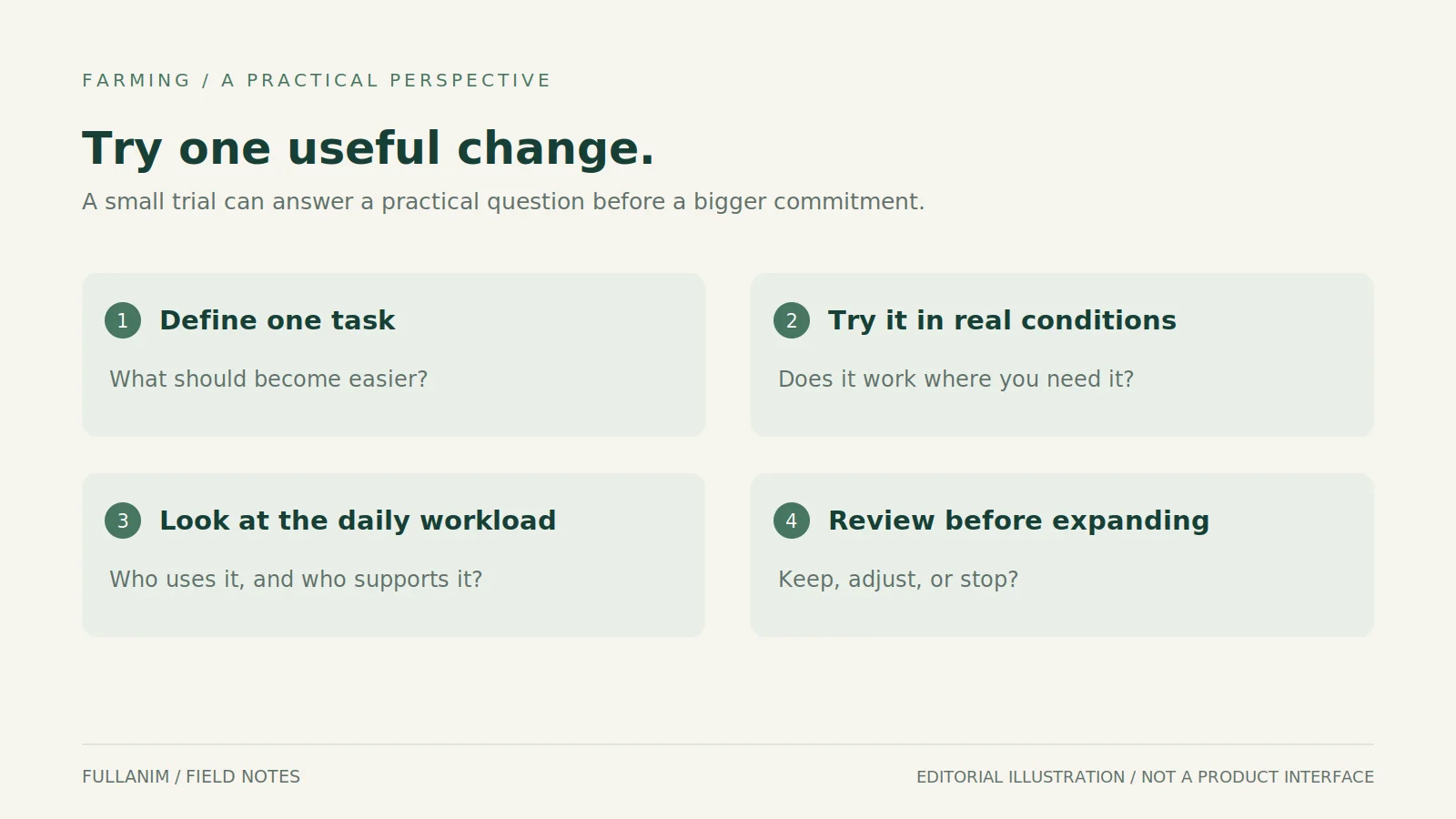
Start with one task, then review what changed before expanding.
So, Does a Farm Need to Be Smart?
It does not need the label.
It needs tools, routines and information that help the people responsible do their work.
Sometimes that will involve connected devices. Sometimes it will involve a simpler process. Often, it will involve both.
The most useful question is not, “How smart is this farm?”
It is, “What would make the next working day a little more manageable?”
That is a better place to start than a shopping list.
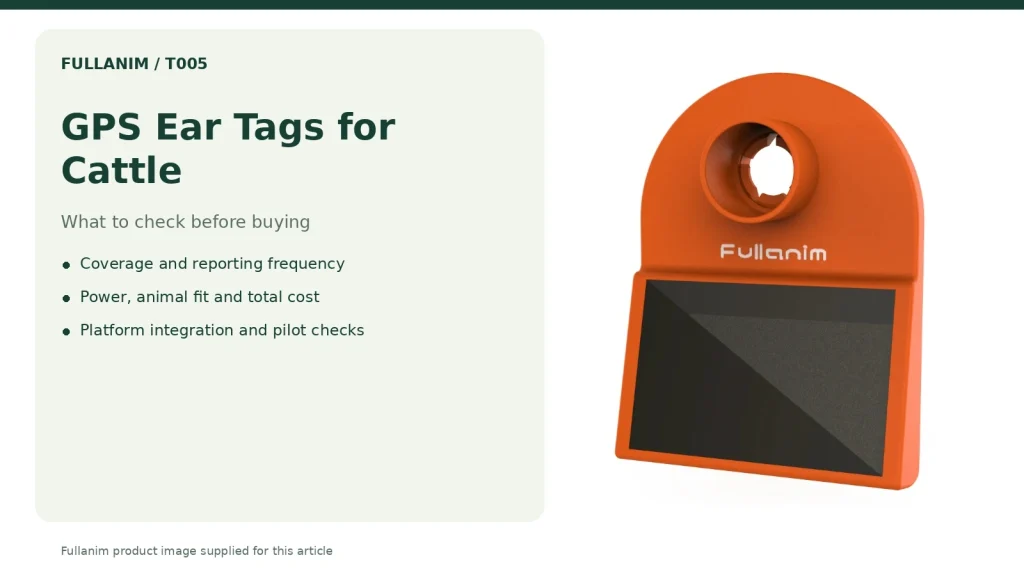
Curious about one example of connected livestock technology? Read Fullanim’s practical guide to how GPS cattle ear tags work.


 Contact us by email